

The Critical Role of Quartz in Semiconductors
In the world of semiconductor manufacturing, even the smallest impurity can lead to catastrophic failure. As wafer sizes increase and nodes shrink, the demand for ultra-high purity quartz components has never been higher. But what exactly makes quartz the backbone of this industry?
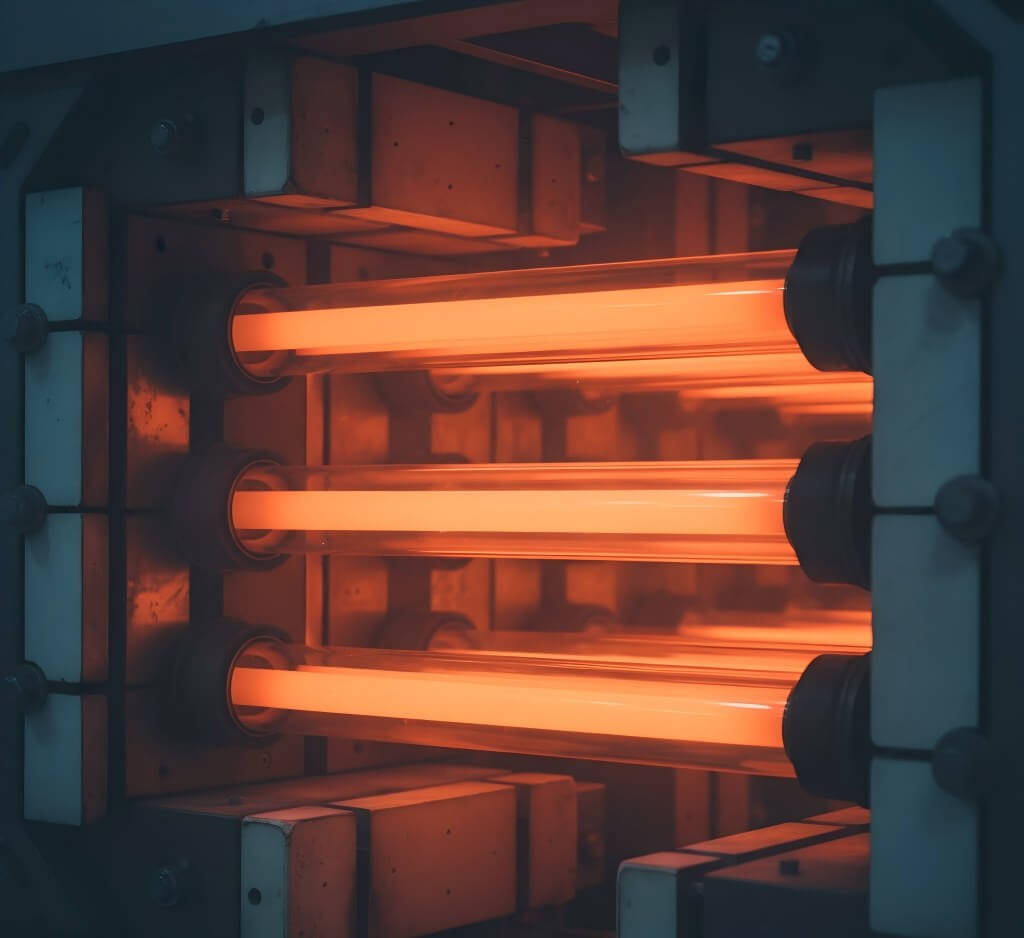
1. Superior Thermal Stability
Semiconductor processes like oxidation, diffusion, and LPCVD often operate at temperatures exceeding 1000°C. High-purity fused quartz offers an incredibly low coefficient of thermal expansion.
- Minimal Deformation: Ensures the quartz tube maintains its structural integrity over hundreds of thermal cycles.
- Wafer Safety: Prevents sagging or warping that could damage expensive silicon wafers.
2. Eliminating Trace Metal Contamination
Standard glass contains impurities like Sodium (Na), Potassium (K), and Iron (Fe) that can migrate into the silicon lattice at high temperatures, ruining the electrical properties of the chip.
- 99.99% Purity: Our quartz tubes are fabricated from the highest grade silica to ensure alkali metal content is kept to a minimum (typically <0.1 ppm for critical elements).
- Controlled Environment: Precision cleaning and annealing processes ensure the surface is free from atmospheric contaminants.
3. Precision Customization for Complex Systems
Every semiconductor fab has unique requirements. A “one-size-fits-all” approach simply doesn’t work when dealing with complex gas inlets, specialized flanges, or oversized furnace tubes.
- CNC Machining: Allows for complex geometries and tight tolerances that standard blowing techniques cannot achieve.
- Expert Consultation: We don’t just supply tubes; we help refine your technical drawings to optimize performance and longevity.
4. Advanced Cleaning & Maintenance Protocols
Achieving the highest performance with High Purity Quartz requires more than just pure raw materials; it demands rigorous post-processing cleaning. In semiconductor fabrication, quartz components are often subjected to Hydrofluoric (HF) acid cleaning to remove any surface trace metals or oxides. However, over-cleaning can lead to surface frosting. Our specialized annealing and acid-washing cycles ensure that every tube maintains its structural integrity and chemical inertness, providing the high-vacuum compatibility necessary for modern wafer processing.
5. Why Ra (Surface Roughness) Matters for Yield
Beyond chemical purity, the physical surface morphology of your High Purity Quartz components plays a vital role. A precision-ground or fire-polished finish affects how precursors flow during chemical vapor deposition (CVD). By controlling the Ra (average roughness) of the quartz surface, we help fabs minimize particulate generation, which is a major cause of wafer defects. Investing in high-grade quartz is not just about the material—it is about ensuring the consistency of your entire production environment.
Understanding Quartz Component Lifespan and Maintenance
In the demanding environment of a semiconductor fab, High Purity Quartz components are considered “critical consumables.” While they are designed for durability, their lifespan is influenced by several factors, primarily thermal cycling and chemical erosion.
One common phenomenon is devitrification, where the amorphous fused silica starts to crystallize after prolonged exposure to temperatures above 1000°C. This can cause the surface to become brittle or “frosty.” To extend the service life of your furnace tubes and wafer boats, we recommend a strict handling protocol: always use lint-free gloves to avoid alkali metal contamination from skin oils, and ensure that the ramp-up and ramp-down temperatures are controlled to minimize mechanical stress. Proper maintenance of your Custom Quartz Tubes can increase their operational cycles by up to 20%, significantly lowering your overall cost of ownership.
Common High Purity Quartz Components for Fabs
To help you optimize your procurement, here is a quick reference of the specialized Custom Quartz Tubes and components we provide for wafer processing:
- Diffusion Tubes: Large diameter tubes used for high-temperature oxidation and doping.
- Wafer Boats and Carriers: Precision-slotted structures designed to hold wafers securely during chemical vapor deposition.
- Quartz Pedestals: Used to support the wafer assembly within the furnace, providing thermal isolation.
- Injector Tubes: Small diameter tubes used to deliver precise amounts of process gases into the reaction chamber.
By choosing a supplier that understands the nuances of Semiconductor Wafer Processing, you are not just buying a part; you are securing the reliability of your entire production line.
Your yield depends on the reliability of your quartz
In high-end fabrication, a quartz tube is more than a consumable—it is a critical variable in your yield equation. If the purity drifts or a flange doesn’t seal perfectly, an entire batch of wafers is at risk. We provide the technical certainty you need to keep your process clean and your uptime high.